
Ohanasi Kagawa

How to Say Sorry in Japanese: 5 Ways to Apologize Like a Native

Learn Japanese

Japanese Culture

2023.02.25

Japanese apologizing

How do you say “sorry” in Japanese? It’s one of the first things travelers and Japanese learners want to know — and the answer is more interesting than you might think.

In Japanese culture, apologizing properly is considered a form of politeness and respect. Japanese people apologize quickly and often, even in situations where Westerners might not feel an apology is needed.

In this guide, you’ll learn:

  • 5 essential ways to say sorry in Japanese — from casual to extremely formal
  • When and how to use each phrase correctly
  • Body language that matches each apology
  • The cultural meaning behind apologies in Japan

Whether you’re traveling to Japan, doing business with Japanese colleagues, or learning the language, knowing these phrases will help you communicate naturally and respectfully.

Let’s dive in!


Why Apologizing Matters in Japanese Culture

Compared to many Western cultures, Japanese people apologize much more frequently — and often quickly take responsibility, even when something isn’t entirely their fault.

For example, when two people bump into each other on the street in Japan, both will usually say “Sumimasen” (excuse me / sorry), regardless of who was at fault.

Why? In Japan, apologizing first isn’t seen as “losing.” It’s seen as:

  • A sign of humility and good manners
  • A way to keep social harmony (和 / wa)
  • Showing respect for the other person’s feelings

Knowing how to apologize properly in Japanese isn’t just about words — it’s about understanding the culture.

Now let’s look at the 5 essential ways to say sorry in Japanese.


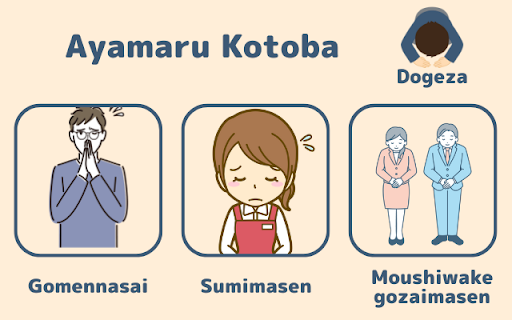
1. ごめん / ごめんなさい (Gomen / Gomennasai) — Casual Apology

Use with: Family, close friends, romantic partners, children

This is the most casual way to say sorry in Japanese. There are three levels of casualness:

PhraseRomajiCasualness
ごめんGomenVery casual (best friends, family)
ごめんねGomen neSoft, friendly
ごめんなさいGomennasaiCasual but slightly more polite

Examples:

  • 「遅れてごめん!」 Okurete gomen! — “Sorry I’m late!”
  • 「ごめんね、わすれてた」 Gomen ne, wasureteta — “Sorry, I forgot.”

⚠️ Important: Don’t use gomen with your boss, customers, or strangers — it sounds too casual and can come across as rude in formal situations.

Body language: Often paired with clasped hands in front of the chest (a small “please forgive me” gesture).


2. すみません (Sumimasen) — Everyday Polite Apology

Use with: Strangers, acquaintances, colleagues, store staff, public situations

Sumimasen is the most versatile word in this list. It means “sorry” or “excuse me” — and you’ll hear it dozens of times a day in Japan.

When to use it:

  • 🚶 When you bump into someone on the street
  • 🚇 When you step on someone’s foot on a crowded train
  • 🍴 When calling a waiter at a restaurant
  • 🙋 When asking a stranger for directions
  • 🚪 When entering or leaving someone’s office

Examples:

  • 「すみません、おみずください」 Sumimasen, omizu kudasai — “Excuse me, water please.”
  • 「おまたせしてすみません」 Omatase shite sumimasen — “Sorry to keep you waiting.”

Fun fact: Sumimasen literally means “this won’t end” or “I can’t finish” — implying that your gratitude or regret has no end. Beautiful, right?

Body language: A small bow (15° angle) usually accompanies sumimasen.


3. 失礼しました (Shitsurei Shimashita) — “Excuse Me for the Rudeness”

Use with: Workplace situations, light formal apologies, leaving a room

Shitsurei shimashita literally means “I was rude” — and it’s used when you’ve done something slightly inappropriate or intrusive.

When to use it:

  • 🚪 When leaving someone’s office or a meeting room
  • 📞 When you call the wrong number
  • 🤝 When interrupting someone briefly
  • ⏰ When you’re a bit late to a meeting

Examples:

  • 「失礼しました!」 Shitsurei shimashita! — Said when leaving someone’s office
  • 「お電話まちがえてしまい、失礼しました」 Odenwa machigaete shimai, shitsurei shimashita — “Sorry, I dialed the wrong number.”

This phrase is especially useful in business and professional settings. It’s polite without being heavy.

Body language: A medium bow (30° angle).


4. もうしわけございません (Moushiwake Gozaimasen) — Deep Formal Apology

Use with: Customers, clients, serious business situations, when you’ve made a real mistake

Moushiwake gozaimasen is the formal apology used in business and customer-facing situations. The word moushiwake means “excuse” — and the phrase literally translates to “there is no excuse.”

It’s a heavy, sincere apology. Use it when you really mean it.

When to use it:

  • 🏪 As a store employee apologizing to a customer
  • 💼 When apologizing to a client for a mistake
  • 📦 When a delivery is delayed
  • ⏳ When customers have been waiting

Examples:

  • 「おまたせして、もうしわけございません」 Omatase shite, moushiwake gozaimasen — “We deeply apologize for the wait.”
  • 「ご迷惑をおかけして、もうしわけございません」 Gomeiwaku wo okake shite, moushiwake gozaimasen — “We sincerely apologize for the inconvenience.”

Even more formal version: 「申し訳ありません」 Moushiwake arimasen (slightly less formal) or 「誠に申し訳ございません」 Makotoni moushiwake gozaimasen (extremely formal).

Body language: A deep bow (45° angle), held for 2-3 seconds.


5. 土下座 (Dogeza) — The Ultimate Apology

Use with: Almost never in modern life — but culturally important to know

Dogeza is the most extreme form of apology in Japan: kneeling on the ground and placing your forehead on the floor.

You’ve probably seen this in samurai movies, anime, or Japanese TV dramas — someone in deep regret throwing themselves to the ground in front of a feudal lord or business client.

Modern reality: Dogeza is rarely used in everyday life today. It’s considered overly dramatic and is mostly reserved for:

  • Historical or theatrical contexts
  • Extreme situations (extremely rare)
  • Symbolic gestures of total submission

When you see it now: Mostly in TV dramas, manga, and anime. If you ever encounter dogeza in real life, it usually signals something very serious has happened.

Cultural note: Even though it’s rare, dogeza remains a powerful symbol in Japanese culture — representing the deepest level of remorse possible.


Quick Reference: Which Apology to Use

SituationPhraseFormality
Texting a friend “sorry I’m late”GomenCasual
Bumping into someone on the streetSumimasenPolite
Leaving a meeting roomShitsurei shimashitaFormal-light
Apologizing to a client for an errorMoushiwake gozaimasenVery formal
Begging for forgiveness in a TV dramaDogezaExtreme

Body Language: How to Bow Properly

In Japan, the depth and length of your bow matches the depth of your apology.

Bow typeAngleWhen to use
Eshaku (会釈)15°Light “sumimasen” — passing someone, light greetings
Keirei (敬礼)30°“Shitsurei shimashita” — business situations
Saikeirei (最敬礼)45°“Moushiwake gozaimasen” — serious apologies
DogezaKneelingExtreme situations only

Pro tip: When apologizing seriously, avoid eye contact during the bow. Looking up while bowing can come across as insincere.


Common Mistakes Foreigners Make

❌ Mistake 1: Saying gomen to your boss or a customer → ✅ Use sumimasen or moushiwake gozaimasen instead

❌ Mistake 2: Using moushiwake gozaimasen for small things → ✅ Use sumimasenmoushiwake is for serious mistakes

❌ Mistake 3: Saying “sorry” in English when you should apologize in Japanese → ✅ Even basic Japanese apologies are deeply appreciated by locals

❌ Mistake 4: Forgetting to bow → ✅ The bow is half of the apology — words alone aren’t enough in formal situations


Practice Apologizing with Native Japanese Speakers — For Free!

Reading about Japanese apologies is one thing. Actually using them in conversation is what makes them stick.

At Ohanasi Kagawa, we connect Japanese learners from around the world with native Japanese speakers for free language exchange events every weekend:

  • Join a free online event from anywhere in the world
  • Get paired 1-on-1 with a native Japanese speaker
  • 15 minutes in Japanese, 15 minutes in English
  • Beginner-friendly — mistakes are always welcome (and you’ll have plenty of chances to practice sumimasen!)
  • 5,000+ members from 55+ countries

You don’t need to be in Japan to start practicing real Japanese.

👉 Join Ohanasi Kagawa for free and start speaking Japanese today!


Summary: 5 Ways to Say Sorry in Japanese

#JapaneseRomajiUse For
1ごめん / ごめんなさいGomen / GomennasaiFriends, family, casual
2すみませんSumimasenEveryday, strangers, polite
3失礼しましたShitsurei shimashitaLight business apology
4もうしわけございませんMoushiwake gozaimasenFormal business, customers
5土下座DogezaExtreme, rarely used today

Key takeaways:

  • Apologizing is a core part of Japanese culture and politeness
  • Match the formality level to the situation — using gomen with a customer is rude
  • Body language (bowing) is just as important as the words
  • Japanese people deeply appreciate when foreigners try to apologize in Japanese — even imperfect attempts!

👉 Join Ohanasi Kagawa for free and practice Japanese apologies with native speakers →


Curious about Japanese language and culture? Check out our other guides:

Share:

CATEGORIES