

If you like Japan, you probably know how wonderful Japanese convenience stores are.
Even in anime and manga, there are many fascinating stories about convenience stores.
When you travel to Japan, one thing you should definitely put on your list of things to do is to shop at a Konbini!
Convenience stores are full of delicious food and fun things to do.
Seasonal sweets
Newly Released Okashi
Unique Japanese sweet bread and ice cream
No matter when you visit a Konbini, you will always find a variety of exciting products.
To enjoy shopping at these Japanese convenience stores, I will teach you one phrase that you may hear at a convenience store.
I will also introduce how to buy a convenience store bento box in Japan, and recommend some delicious convenience store foods.
Read this article and expand your conversation on the topic of your favorite Konbini!
※ Konbini is a convenience store in Japanese
Fun to buy bento at a convenience store.
One of the things you look forward to in Japan is experiencing the food culture.
We recommend trying the obento culture that is becoming popular in other countries as well.
Convenience stores have a wide variety of obento available for you to try.
Generally, a bento consists of rice and side dishes.
A donburi is a bowl of rice topped with a side dish.
Onigiri, sushi sets, and other standard bento are available.
If you visit a Konbini for the first time, you must be surprised at the great variety of bento and the low prices.
Let’s get familiar with the Japanese bento culture at a Konbini!
「お弁当あたためますか?」
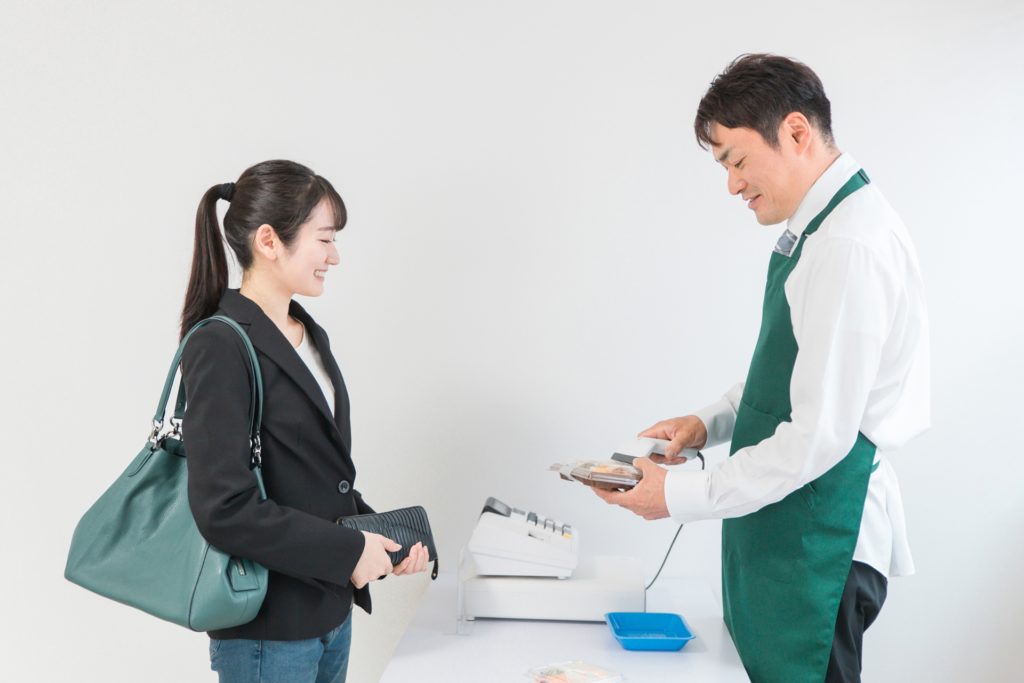
When you buy a bento, the cashier will always ask you this phrase.
The phrase means whether you want to heat up the bento you bought or take it home as it is.
This is a service to make your bento tasty.
Bento boxes are placed in the refrigerated zone for sanitary reasons.
The cashier will heat up your bento in a microwave oven.
レジ係(がかり)
「お弁当(べんとう)あたためますか?」
Cashier
“Would you like to warm up your bento?”
お客 (きゃく)
「おねがいします」
Customer
“Yes, please.
Wait a little while for the microwave oven to warm up the bento.
You have to be careful.
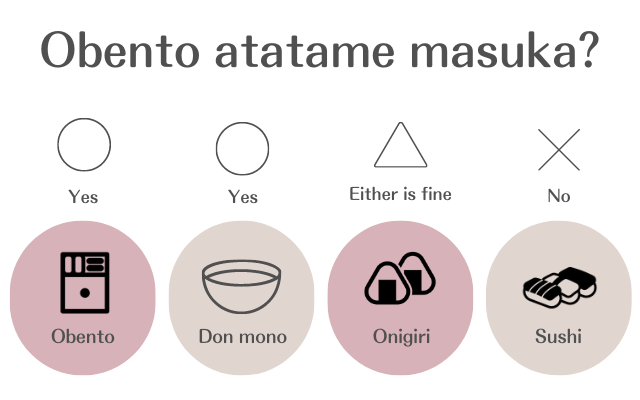
Ask the cashier to warm up your bento or rice bowl.
Onigiri is tasty either cold or warm, so it doesn’t matter whether you warm it up or not.
You should not warm up sushi.
「お弁当(べんとう)あたためますか?」“Would you warm up your bento?”
If you know this phrase and what it means, you can definitely enjoy your bento at a convenience store!
Try these convenience store foods
There are convenience stores all over the city.
Each store has its own unique characteristics.
Each convenience store has its own delicious convenience store food.
If you know these items, Japanese people may recognize you as a specialist in Japan!
セブンイレブンの「おでん」(冬限定) Seven-Eleven’s “Oden” (winter only)
ファミリーマートの「ファミチキ」Family Mart’s “Famichiki
ローソンの「からあげくん」Karaage-kun” by Lawson
ミニストップの「ソフトクリーム」Ministop’s “Soft ice cream
These are regular convenience store foods, so you can easily find them.
I highly recommend these tasty items, which even if you eat them for the first time.
Let’s talk about convenience stores at Ohanashi Kagawa!


Popular Articles
- Learn About the Different Types of Sushi and Enjoy Sushi Even More!
Sushi is always one of the top three things foreigners want to eat when the...
- What languages are spoken in Japan? If you want to study Japanese! Types, official language, and second language.
If you are interested in Japan, the first thing you will probably wonder ab...
- Ohanasi Kagawa Event Participation Instructions
In this page, we will tell you how to participate in the Ohanasi Kagawa lan...